Old West Saviors

Keepers of the Seed

Silver_City_New_Mexica_Susan_Berry_Jana_Bombersbach_Preservation


Keepers of

the Seed

A partnership allows the first Cornhuskers to save the ancient Eagle Corn seed.

The last 50 kernels of Eagle Corn were kept in a mayonnaise jar, the last seeds of a mother corn that had nurtured the Pawnee people for generations and was taken with them when they were exiled from Nebraska to Oklahoma in the 1870s.

But the corn wouldn’t grow in Oklahoma. Deb Echo-Hawk, the “Keeper of the Seed,” was worried her people would never eat the beautiful Eagle Corn again—a brand so unique that its pure white kernels sport a purple spot that expands as the corn grows, eventually looking like the spreading wings of an Eagle.

Then she got a call from back home—from the educational director of the Great Platte River Road Archway in Kearney, Nebraska. Ronnie O’Brien explained that since opening day in 2000—the $60 million project built over I-80 commemorates all those who settled the West—she had been hearing the same complaint: “We didn’t tell enough about the Native Americans who had lived here first.”

So O’Brien went to the Pawnee Nation for help in telling their story. She quickly discovered a big part of that story was how they had grown such prodigious corn; to the Pawnee, Nebraska was a “cornhusker state” long before white pioneers came and centuries before the state existed.

That’s the first time O’Brien ever heard of Eagle Corn: “Nothing like that exists on Earth,” she learned.

She also found out that a few years earlier, the tribe had begun its Seed Preservation Project in a last ditch effort to keep several varieties of its mother corns from extinction.

The Pawnee had never entrusted their corn seeds to a non-tribal member before, and it took some discussion before the tribe’s Cultural Committee agreed to send some to O’Brien. “We have very little seed, and if we didn’t trust someone, we might lose it in a bad year,” Echo-Hawk says. “Ronnie being from our homeland made sense.”

So in 2004, some Eagle Corn seeds were sent to Nebraska. “The Pawnee had grown this corn here for 600 years, and they’d been trying to save it since they were forced to Oklahoma in the 1870s. Now we were trying one last time to see if it would grow here again,” O’Brien says.

The first crop didn’t take, but the next year, the last 25 seeds were sent in a desperate effort to keep the Eagle Corn from extinction. That time, O’Brien watched in astonishment. “It was just amazing—I’ve never seen plants just burst from the land like they did; they jumped out of the ground.”

O’Brien laughs about being the “person most unlikely” to grow this special crop.  “I grew up in cornfields. I was so tired of corn, I never wanted to grow it again—but this was different,” she admits. “And boy, did it grow; it was home.”

Back in Oklahoma, Echo-Hawk and the Pawnee people know they have saved something precious. “This corn defines us as a people. It’s something that nurtured us for hundreds of years—physically and spiritually,” Echo-Hawk says.

Corn was not just a staple of Pawnee life in Nebraska. It was included in all sacred ceremonies, and warriors wore an ear of corn on their left shoulder for safety during battle.

The project has been so successful, in November 2010, for the first time in 125 years, a Pawnee ceremony in Oklahoma included Eagle Corn soup from corn grown at the archway’s garden.

“This is the best food I’ve ever tasted,” O’Brien says. “It doesn’t taste like corn.  It tastes like almonds with cream in it.”

To Echo-Hawk, it is the taste of her ancestors. Now she and O’Brien are working together to help other tribes recapture their agricultural heritage.

For more information, visit the “Pawnee Seed Preservation Project” on Facebook.

Jana Bommersbach has been Arizona’s Journalist of the Year and has won an Emmy and two Lifetime Achievement Awards. She is    the author of two nationally-acclaimed true crime books and a member of Women Writing the West.

Silver City’s Treasure

susan_berry_silver_city_new_mexico_historical_preservation_main_streetSusan Berry grew up in Silver City, New Mexico, a place she remembers as “not a lot happening, but loaded with potential.”

Read more:

A Cosmopolitan Rehab

A 19th-century gathering place revivifies Old Town San Diego.

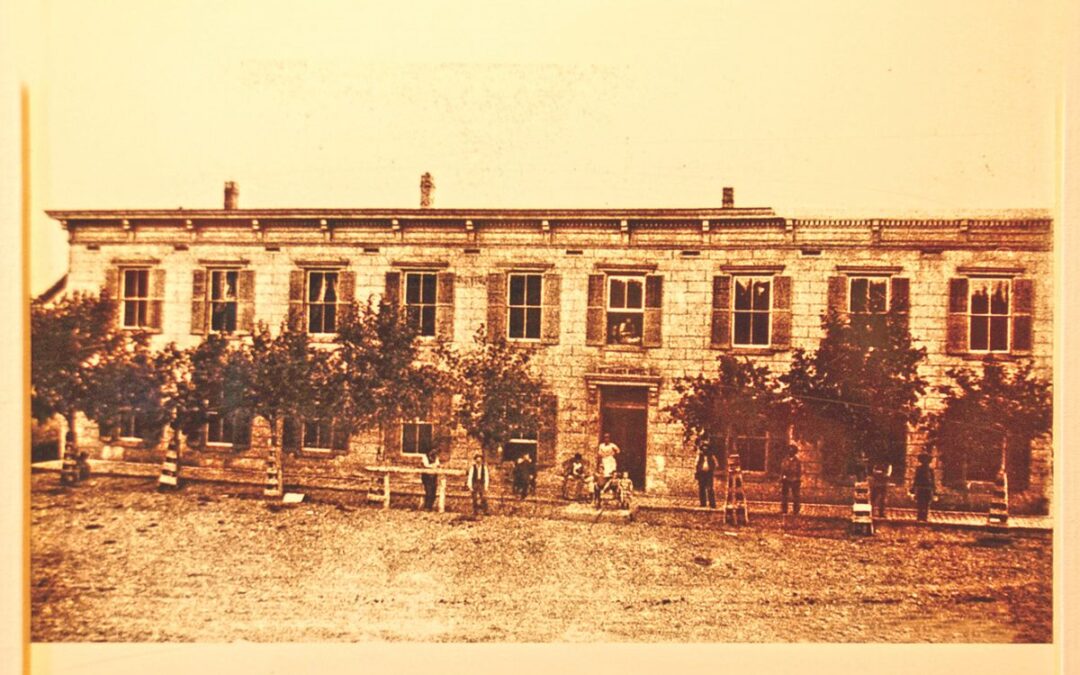
Casa de Bandini was once the grand home of an elite Mexican family in the days when San Diego was a pueblo and California was a foreign land.

Read more:

Supersized in San Antonio

san_antonio_witte_museum_texas_artifactsTexans don’t call San Antonio’s Witte Museum the “people’s museum” to be folksy.

Read more:

Rock 'n' Roll Pony Express?

How this documentary inspired this man to share the Pony's story.

You wouldn’t think that movie director Peter Bogdanovich and rock star Tom Petty would inspire a documentary film on the Pony Express of the 1860s, but that’s exactly how this story begins.

Read more:

Hoop Dance Dynasty

tony-duncan_offical_native_dancers_arizona_hoop-dancing-reviveThanks to the pull of love, one of today’s most acclaimed hoop dancing families in the nation helped to revive the native dance that had all but died by the 1980s.

Read more:

Rescuing a State Park

Mitzi Rinehart is just one of many volunteers saving our nation’s parks. 

As a volunteer at Arizona’s Lost Dutchman State Park, Mitzi Rinehart thought the most oft-asked question she’d ever answer was “Where’s the Gold?”

Read more:

Keeping New Mexico’s Pueblo Culture Alive

joann_gifford_phillips_pueblo_new_mexico_chamiza-foundationThe Phillips family always loved their annual summer trip to Santa Fe from their California home in the 1950s and ’60s.

Read more:

The Seeds of Navajo Soul

Radmilla Cody twists traditional Navajo songs with her bending notes.

“Tears” from the album Spirit of a Woman by Radmilla Cody / Courtesy Canyon Records License #2010-067. All rights reserved. Visit Canyon Records to order the album.

Her voice is beautifully melodic and haunting, and the words are in a language few people understand, but there is no mistaking the heart and soul of what Radmilla Cody is singing.

Read more:

Deadwood Strikes Gold with Mining Relic

deadwood_gold_mining_soulth-dakota_mountain-grand_hotel_casinoNames can be deceiving.

Read more:

A Crotchety Cowboy Mentor

oct10_saviors

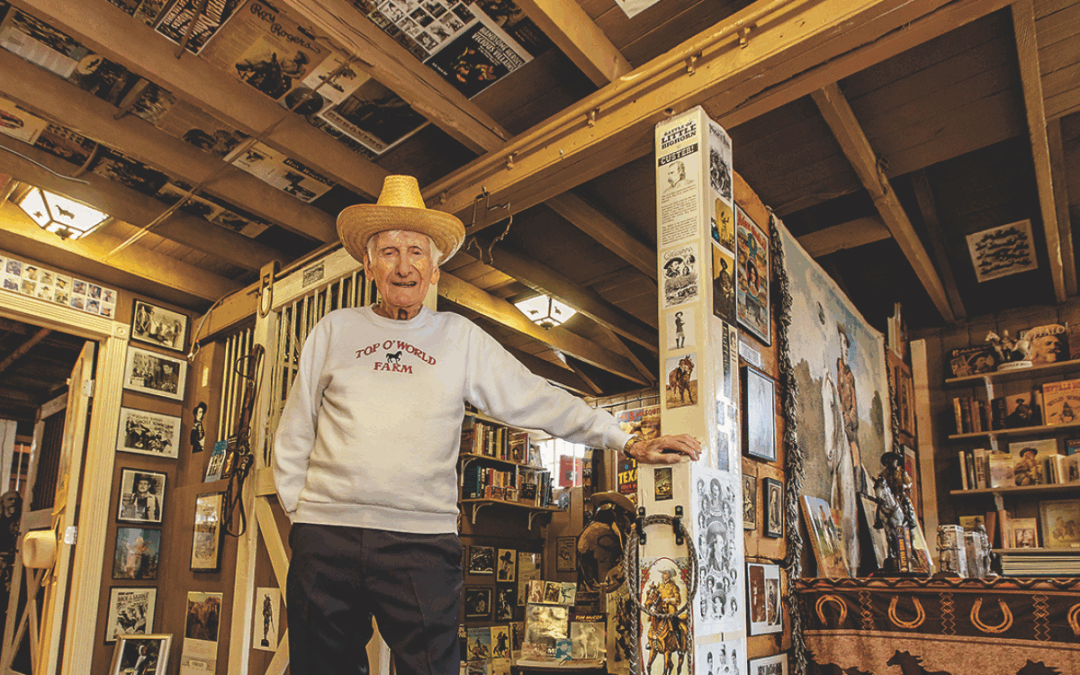
Some 30,000 pictures ago, Gil Gustavsen and Cheryl Stapleton thought they were going in a totally different direction.

Read more:

Galveston’s Guardian Angel

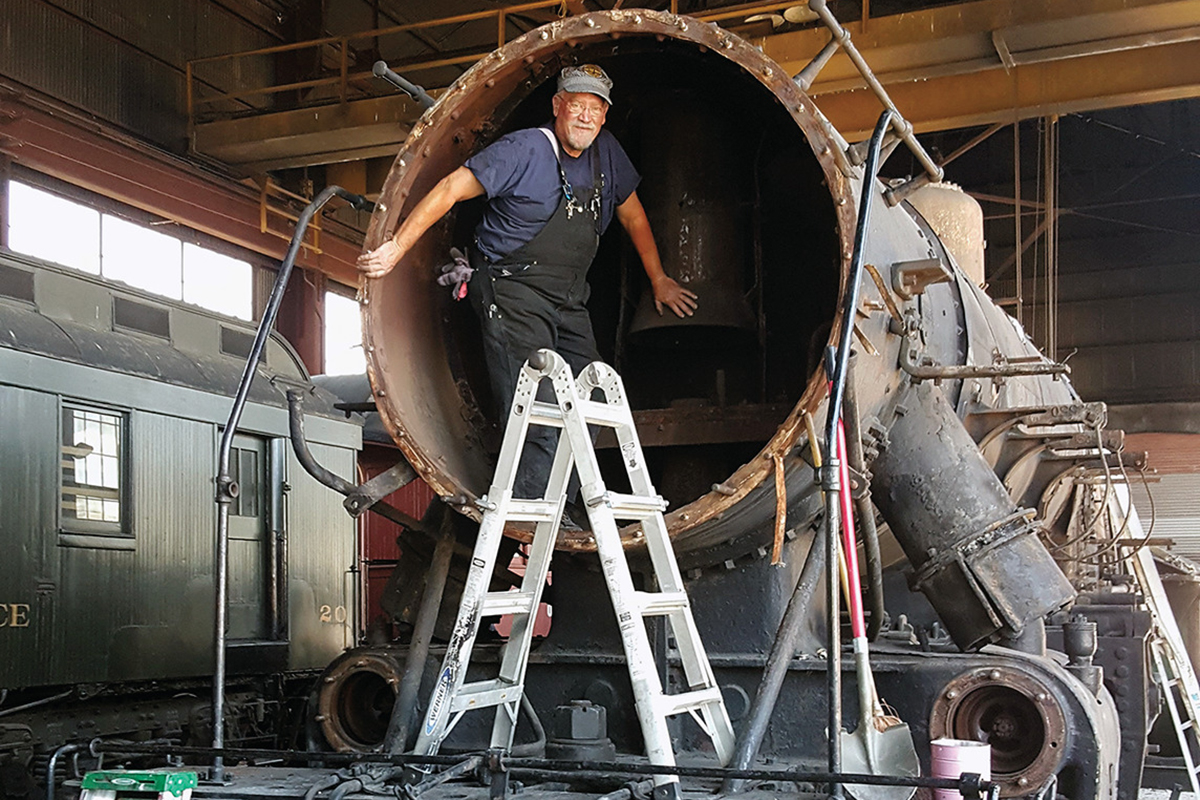
old-west_saviors_morris-gould_galveston-railroad_musuemConsidering all the guardian angels who have looked over the Galveston Railroad Museum for more than a quarter century, where were they in the early morning hours of September 13, 2008, when Hurricane Ike almost destroyed it all?

Read more:

Saving the Comanche Language

How two linguists are placing ancient moccasins on modern feet.

It’s a simple question: “If you don’t have your language, what’s left? In a language, people have a sense of identity.”

Read more:

The Hotel Heroes of Small-Town Texas

old_west_saviors_duncans_hotel-limpiaThey thought they were just buying out the family business—the hotel Joe Duncan’s folks had owned off-and-on for decades.

Read more:

One Basket at a Time

Yosemite National Park Ranger Julia Parker takes on a crazy notion.

Julia Parker discovered her talent and passion for weaving from an unexpected source.

Read more:

Keeping the Peace

saviors_pioneers-cemetery-associationIt just didn’t seem right that a tombstone was propped up in front of an antique store in Mayer, Arizona.

Read more:

Arizona Rough Riders

Re-enactors honor the heritage of a brave “cowboy cavalry.”

Arizona sought statehood for years, but politicians back East turned their backs, seeing Arizona as too “uncivilized” to join the Union.

Read more:

Cuchillo Crusader

josh-bond_cuchillo-barA family of wild turkeys is to thank for Josh Bond and his heroic efforts to save an abandoned town almost everyone has overlooked.

Read more:

The Invisible Indian Tribe

Lee Ann Allen is helping a New Mexico tribe gain back its status.

Few people have ever heard of the Piro-Manso-Tiwa tribe that is scattered around Las Cruces, New Mexico.

Read more:

Women Writing the West

women-writing-the-westYou could read 100 books on the American West and never hear the voice of a woman.

Read more:

Depression-Era Treasure

Hohokam canal culture saved in 1929 still offers answers to this day.

In Phoenix, which means rebirth, the realization that history could be found deep beneath the Arizona dirt came when what is now America’s fifth largest city was nothing but a wide spot along a bad road.

Read more:

MARCH 2012

True West Magazine Issue March 2012
Buy This Back Issue: March 2012

APRIL 2012

True West Magazine Issue April 2012
Buy This Back Issue: April 2012

MAY 2012

True West Magazine Issue May 2012
Buy This Back Issue: May 2012

JUNE 2012

True West Magazine Issue June 2012
Buy This Back Issue: June 2012

JULY 2012

True West Magazine Issue July 2012
Buy This Back Issue: July 2012

True West Site Guide

Mission

True West captures the spirit of the American West with authenticity, personality and humor by linking our history to our present. Whether you call it the Wild West, the Old West or the Far West, America's frontier history comes to life in True West, the world's oldest, continuously published Western Americana magazine.

Western movie fans, re-enactors, history buffs and road warriors, we got your history covered: outlaw, cowboy, Indian, lawman, gunfighter, fur trapper, miner, prospector, gambler, soldier, entertainer and pioneer. Check out these True Westerners now!
 

Product of the Month

The Illustrated Life and Times of Wyatt Earp

Wyatt Earp

"Your book is fascinating, coupling your powerful illustrations [and] tracking...from birth to Tombstone to the legend [Wyatt] had become;...even Wyatt would approve." --By Hugh O'Brian, of the TV series The Life and Legend of Wyatt Earp

"Hands down the definitive books on Wyatt Earp and Doc Holliday." --By Allen Barra, New York Newsday